Why Your Morning Bus Crawls While Trains Fly
The frustration is familiar. A bus pulls away from the curb, reaches the main corridor, and then becomes part of the same traffic it is supposed to help replace. It waits behind a delivery van, loses a signal cycle at a red light, and pauses again while passengers board one at a time through a front door. Meanwhile, private cars occupy most of the street, often carrying only one person, yet they determine the speed of everyone else”s journey.
This creates a false choice for cities. On one side stands the multi-billion-dollar subway or metro project, capable of moving large numbers of people but often requiring a decade of planning, complex tunneling, property negotiations, and disruptive construction. On the other is the conventional bus network, inexpensive to expand but vulnerable to congestion and inconsistent travel times. The gap between those options is where high-quality Bus Rapid Transit, or BRT, becomes strategically important.
True BRT does not simply place a new logo on ordinary bus service. It treats the corridor as a complete transportation system. Dedicated lanes, stations designed for rapid boarding, prepaid fares, signal priority, frequent service, and carefully chosen routes work together to keep vehicles moving. The result is rubber-tire transit engineered around the same basic objective as a subway: continuous forward motion, predictable arrival times, and enough capacity to make car-free travel a practical choice.
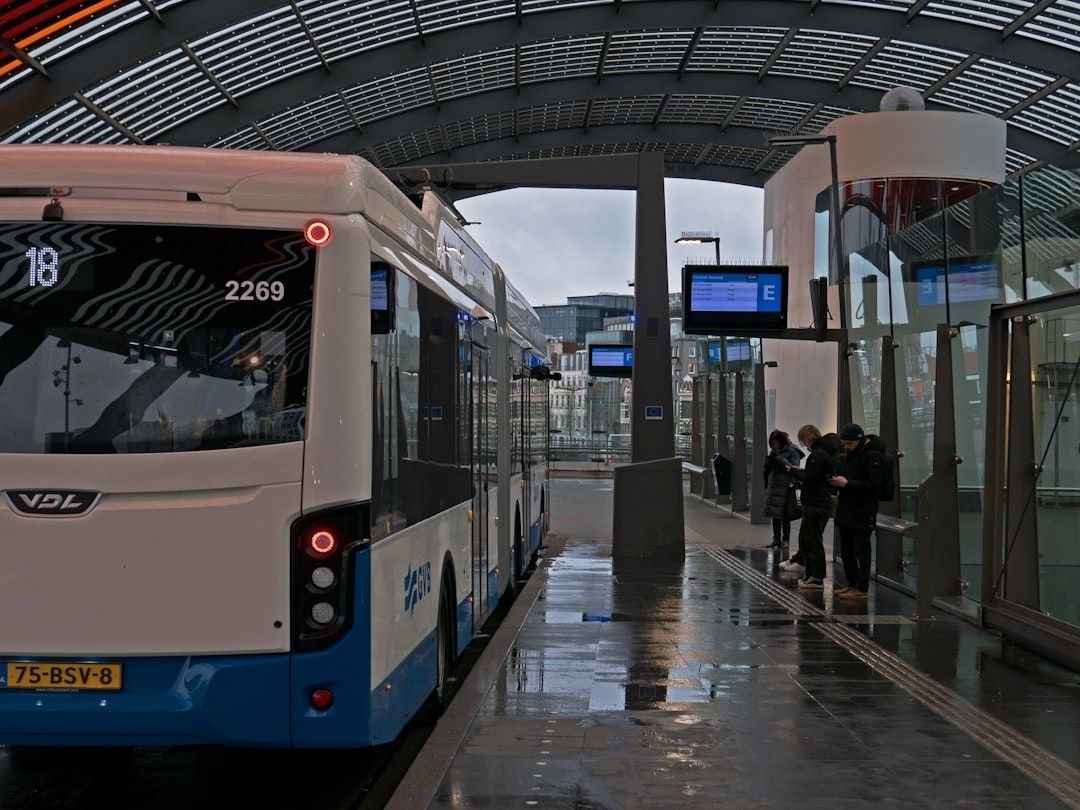
The Anatomy of Delay and the Physics of True BRT
A traditional city bus loses time through repeated friction points rather than one dramatic failure. It may spend part of a trip circulating in mixed traffic, then wait at signals, merge around parked vehicles, and stop at closely spaced curbside stops. Boarding is another major source of delay. When every passenger must enter through one door, approach a driver, pay or tap a fare, and sometimes ask a question, a busy stop can consume more time than the actual movement between stops. On a crowded route, these small pauses accumulate into a large share of the operating schedule.
That is why BRT must be evaluated as a package of mutually reinforcing design decisions. The Institute for Transportation and Development Policy BRT guide emphasizes implementation from corridor selection through operations, public engagement, funding, fleet procurement, and equitable fare planning. The point is not that every corridor needs identical infrastructure. The point is that speed and reliability depend on protecting the entire chain from roadway delay to passenger boarding.
- Exclusive right of way: Buses need lanes physically protected from general traffic, especially at congested intersections.
- Median alignment: Running buses in the center of the street reduces conflicts with curb parking, deliveries, and vehicles turning across the route.
- Off-board fare payment: Passengers pay before entering, allowing boarding through multiple doors.
- Level boarding: Platforms and bus floors meet closely enough to make entry fast and accessible.
- Frequent service and limited stops: Stations are placed to balance access with operating speed, while short headways reduce waiting.
- Signal priority and strong operations: Traffic signals, schedules, passenger information, and control centers work together rather than separately.
These features restore something ordinary buses lose in crowded streets: a continuous path. A dedicated lane prevents a bus from being trapped behind a turning car. A median station makes curbside obstruction less relevant. Level boarding removes the step that slows passengers with mobility devices, luggage, or strollers. Signal priority reduces the number of complete stops. Each improvement is modest by itself, but their combined effect changes the physics of the trip.
Eliminating Dwell Times with Level Boarding and Pre-Paid Fares
Boarding delay is easy to underestimate because it occurs in short increments. Suppose a busy stop serves 30 passengers and each person takes only four seconds to pay and enter. That is already two minutes, before accounting for crowding, fare disputes, boarding assistance, or passengers moving toward the rear of the vehicle. At several stops, the cumulative delay can add many minutes to a single trip. It also creates irregular spacing between buses, since a vehicle delayed at one stop may catch the bus ahead while the following vehicle arrives nearly empty.
Off-board payment changes the sequence. Passengers validate a fare at the station before the bus arrives, then board through any available door. Raised platforms or carefully designed boarding areas eliminate steps and narrow gaps, allowing faster movement for wheelchair users, people with limited mobility, parents with strollers, and travelers carrying bicycles. According to research and guidance from the Institute for Transportation and Development Policy, off-board fare collection and level boarding can reduce platform dwell time by up to 70 percent.
The accessibility benefit is inseparable from the operational benefit. A system that makes boarding easier for a wheelchair user also makes boarding quicker for everyone else. Wide doors, clear station circulation, visible route information, and generous platform space reduce hesitation and crowding. These details also make BRT feel more like a rapid transit service than an upgraded curbside bus, which can influence whether occasional riders view it as dependable enough for work, school, appointments, and everyday errands.
How BRT Stacks Up Against Subways and Light Rail
The strongest argument for BRT is not that it can replace every subway. Underground rail remains valuable in the densest corridors, where land is scarce and demand is consistently high. Rail can also offer permanence that supports long-term development. But many cities face a more immediate problem: large numbers of people need faster service now, while capital budgets cannot support a rail project everywhere. BRT can provide a substantial share of rapid transit benefits without requiring tunnels, extensive track construction, or a fixed steel guideway.
Costs vary widely by geography, land acquisition, utility relocation, station design, and the extent of grade separation. Even so, the relative pattern is clear. The California Department of Transportation describes BRT as a cost-effective mode that combines the flexibility of buses with many qualities associated with rail, including dedicated facilities, improved stations, limited stops, prepaid fares, level boarding, real-time information, and signal priority. The comparison below is therefore best read as a planning framework rather than a universal price schedule.
| Measure | Subway or metro | Light rail | Gold-standard BRT |
|---|---|---|---|
| Capital intensity | Very high, especially with tunneling and major stations | High, with tracks, utilities, power, and stations | Low to moderate, depending on lane protection and station quality |
| Typical construction timeline | Often many years to more than a decade | Several years, with substantial corridor disruption | Often shorter and suitable for phased delivery |
| Operating flexibility | Low once built | Low to moderate | High, with route and fleet adjustments possible |
| Peak capacity | Very high | High | Moderate to high with articulated buses, short headways, and efficient stations |
| Surface disruption | Limited after construction, but major during tunneling and station work | Significant along the rail alignment | Concentrated on street redesign, stations, signals, and utility work |
| Expansion potential | Dependent on major capital projects | Dependent on new track and vehicles | Can be extended, reconfigured, or upgraded incrementally |
Research and planning commentary frequently cite BRT projects costing a fraction of comparable light rail lines, although individual results depend on design quality and local conditions. A low-cost bus route in mixed traffic should not be compared with a fully separated, station-based BRT corridor. The relevant comparison is between systems that offer similar travel-time reliability and passenger experience. When BRT receives only painted lanes and ordinary curb stops, its performance will reflect those compromises.
Clearing the Path with Dedicated Rights of Way and Signal Priority
Paint alone rarely protects a high-capacity transit route. A white line can be crossed by a delivery truck, blocked by a parked vehicle, or erased by turning traffic. Median-running BRT provides a stronger physical arrangement. By placing buses between opposing traffic flows, cities reduce conflicts with curb activity and limit the number of locations where turning vehicles cross the transit path. Where demand and street width permit, raised separators, curbs, islands, or other treatments can make the priority unmistakable.
Transit Signal Priority adds a digital layer to the physical one. An approaching bus can communicate with the traffic signal system, which may extend a green phase, shorten a red phase, or adjust coordination along a corridor. Priority should be carefully programmed rather than treated as an unlimited command to stop cross traffic. The objective is to reduce avoidable delay while preserving pedestrian safety, cross-street operations, and emergency access. When combined with short headways and reliable schedules, signal priority helps turn isolated advantages into a consistently faster journey.
Local transportation departments can approach a BRT conversion as a staged engineering program rather than a single all-or-nothing megaproject:
- Select the corridor using evidence. Examine passenger demand, congestion, job access, housing growth, crash patterns, existing bus delays, and the neighborhoods that would benefit most from better service.
- Measure the full source of delay. Use GPS and stop-level observations to separate traffic congestion, red lights, boarding, layovers, curb conflicts, and poorly spaced stops.
- Design the right of way first. Decide where buses will run, how intersections will operate, where pedestrians will cross, and how deliveries, cycling, parking, and emergency vehicles will be accommodated.
- Build stations around fast boarding. Include off-board payment, level platforms, clear passenger information, weather protection, lighting, and enough circulation space for busy periods.
- Coordinate signals and operations. Deploy transit signal priority, adjust schedules, manage bus spacing, and monitor performance through a central control process.
- Test, measure, and improve. Begin with temporary materials where appropriate, collect data, engage affected communities, and convert successful treatments into durable infrastructure.
The process should also account for who gains and who bears the disruption. Better transit access can connect residents to jobs, education, health care, and local businesses, but construction can affect parking, loading, crossings, and storefront access. Transparent design, accessible public engagement, and mitigation for small businesses are not administrative extras. They are part of building a corridor that people can trust and use.
Transforming Our Arterial Streets into High-Speed Lifelines Today
BRT offers cities a practical way to match urgent mobility needs with realistic budgets. Its value comes from systems engineering, not from calling an ordinary bus route rapid transit. Physically separated lanes protect movement, off-board payment and level boarding compress station stops, and signal priority reduces intersection delay. Together, these elements can deliver subway-like reliability and competitive speeds while preserving the flexibility to extend service as neighborhoods and travel patterns change.
Residents and advocates can ask precise questions when a BRT proposal appears. Are the lanes physically protected? Do buses run in the median where turning conflicts would otherwise undermine reliability? Are fares paid before boarding? Are platforms level and fully accessible? Will signals prioritize buses, and will the agency publish travel-time and reliability results? Demanding these standards helps prevent watered-down projects that spend public money without delivering rapid transit performance.
The long-term opportunity is larger than a faster bus. A well-designed corridor can reclaim time from congestion, reduce the need for car ownership, improve air quality, make walking to stations safer, and support streets where more people can move without consuming more road space. With disciplined design and accountable operations, ordinary arterial roads can become high-speed lifelines, giving cities a faster way forward without waiting for every transportation solution to arrive underground.